As artificial intelligence reshapes the world of work, the creative economy faces a pressing question. Can the arts “deliver a fair, dignified future of work for everyone, where people are supported into better jobs in a more productive economy”?
This is the stated ambition of the UK government’s newly launched AI and Future of Work Unit. But for arts workers the real question is more urgent: what, realistically, does an AI-driven future mean for the viability of their livelihoods?
AI rapidly transforming arts work
Globally, the mood is far more mixed than the optimism suggested by government rhetoric. Last year, our research* at Queen Mary University with the Alan Turing Institute, the Institute for the Future of Work and four major arts trades unions found that 70% of UK creative workers fear their work could be displaced by AI.
The World Economic Forum estimates that 26% of creative tasks are at high risk of automation. Meanwhile, an Arts Council England report offers a counter-narrative: artists and creators are some of those at the vanguard of AI innovation.
With AI rapidly transforming arts work, the sector has not been silent, concerned that AI risks extending the already precarious conditions of many creative livelihoods.
As Philippa Childs, head of BECTU puts it: “Freelancers already face precarious contracts, insecure work, and the constant pressure of making ends meet. As AI is embedded into creative production, often without workers even being told, we risk letting technology become a smokescreen for eroding rights.”
Undue focus on copyright
But much of the current debate in the sector has centred on generative AI, focusing on the use of creative outputs to train large language models, and the resulting damage to copyright protections for artists. This means that a crucial part of the industry picture is missing.
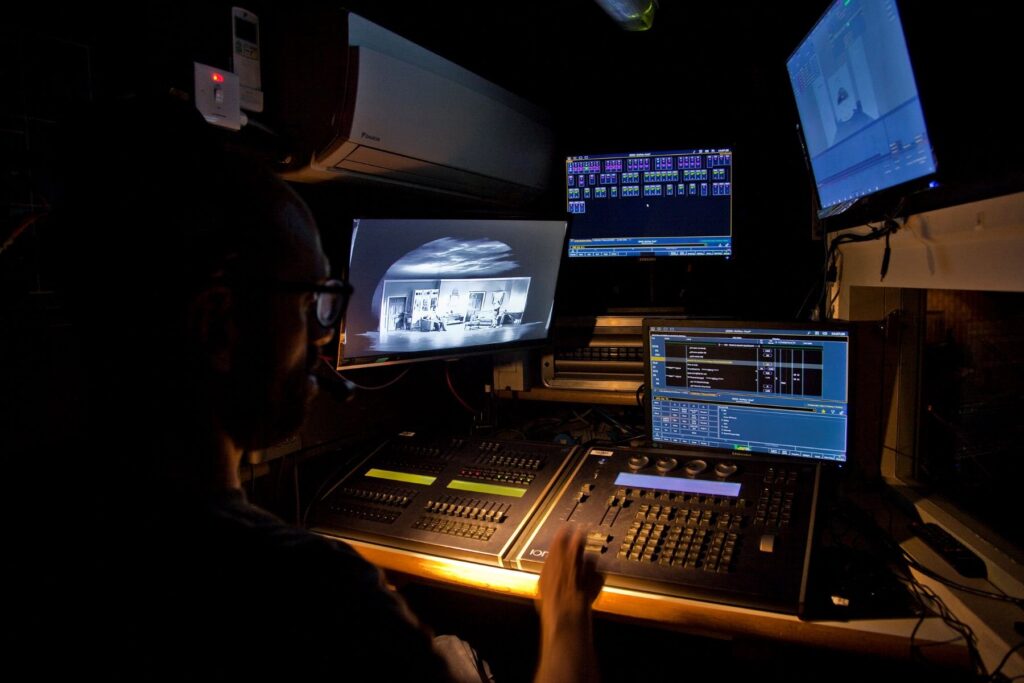
The focus on copyright overlooks the majority of people working in the creative industries: technicians, crew, ‘below the line’ and support staff. These workers significantly outnumber artists and creators, and their work is rarely protected legally by copyright or IP. European Parliament data illustrates the scale of this imbalance: technical and support workers make up 88% of the television workforce and 77% of the book trade. When AI policy debates revolve solely around creators and rights-holders, they miss out on most of the creative workforce.
The problem is compounded by the sector’s heavy reliance on freelancers. While campaigns for a government freelance commissioner continue to stall in Parliament, recent research such as Arts Council England’s Freelancers Study have begun to shed better light on freelance experiences. However, even here the focus remains skewed towards creators with over 81% of respondents identified as occupying creative roles.
In such a fragmented labour market, the central challenge is not only the viability of specific roles, but of creative workers juggling multiple jobs. Even if policymakers were to prioritise the sustainability of work by artists and creators alone, this approach would still fail.
Many creators subsidise their artistic practice through paid ‘non-creative’ work. If those jobs are displaced or underpaid due to AI, the eco-system of creative practice risks collapse. Focusing only on individual creators’ rights ignores the interdependent systems of labour that sustain the creative economy across its many sectors.
Historical bias
Academic research mirrors this blind spot. Technical and support workers have long been marginalised in scholarship. This bias stretches back to the eighteenth century, when systems of funding art were radically transformed. When art was commissioned by royal or religious patrons, the idea of the ‘artist’ was far more akin to what we would now think of as an ‘artisan’. Artists (composers, writers, painters, choreographers etc) were seen as master craftsmen who worked within guild structures in service to the power and status of their patron.
This changed as art moved into a secular, market-driven economy. Private collectors, publishers and ticket sales replaced the court and church as sources of income, and with them emerged the modern figure of the ‘artist’. As historian Larry Shiner explains, this new role celebrated originality, self-expression and intellectual freedom.
Artistic value was increasingly tied to the idea of individual genius. This shift split artistic labour in two. The artist became the bearer of special talent and visionary insight, while technicians and craft workers were assigned the embodied, collective and commercial dimensions of creative production. Art was detached from the technical practices and collaboration that made it possible in the first place.
As markets for art expanded, new legal frameworks followed. Intellectual property and copyright emerged through fierce nineteenth-century campaigns by artists to claim financial control over their work as ‘cultural capital’ – legal protections that artisans and technicians were rarely afforded. The idea of artists as ‘creatives’ follows from this logic even when it’s obvious that much technical work is in fact highly creative, and artistic work is not always.
Increasingly untenable distinction
This historical legacy still shapes how arts workers are employed, valued and protected today – and it continues to inform how AI is debated across the sector. But as AI risks accelerating already precarious working conditions, this distinction is becoming increasingly untenable.
A fair and dignified future of work in the arts cannot be built by protecting ‘art’ alone. It must safeguard everyone whose labour keeps the creative economy alive. As Philippa Childs puts it: “Every role in the creative industries has value, and the use of AI must not strip recognition and fair reward from the people who make our sector thrive. Technical work underpins creative production and must not be treated as expendable in the rush to adopt new technology.”
*In 2025 Monks collaborated on a major research project examining the effects of AI on the creative workforce with Equity, BECTU, Musicians’ Union and Society of Authors, Alan Turing Institute and the Institute of the Future of Work. Insights and findings from this project can be found here.