
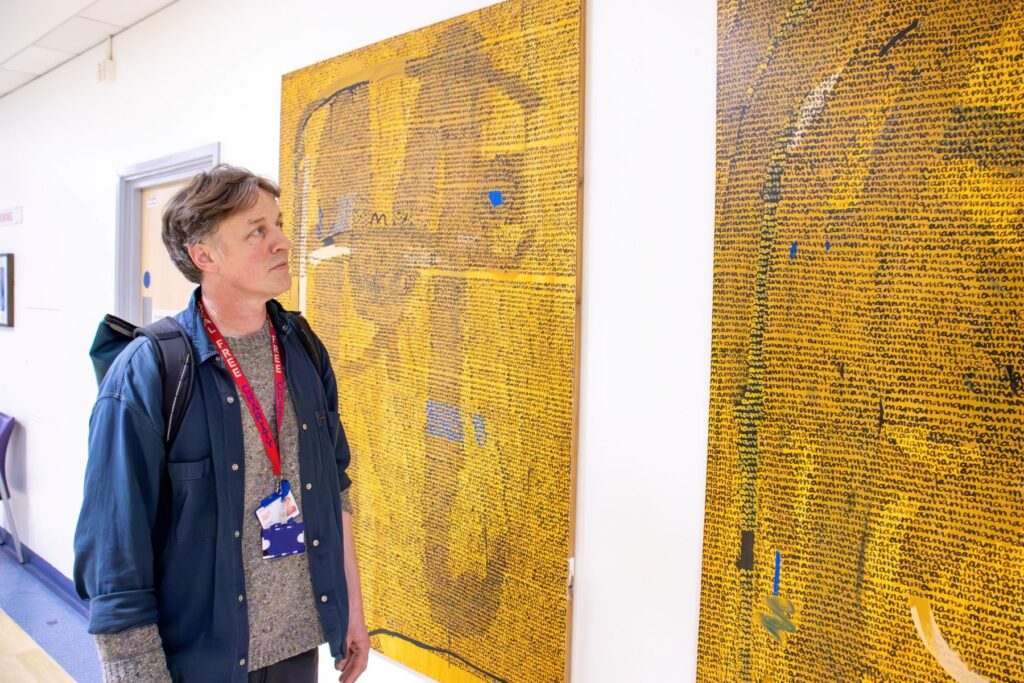
Art as medicine may sound like a metaphor rather than a serious proposition. Yet anyone who has walked through the Royal Free Hospital (RFH) in London will recognise its validity. Here, art is not just decoration, it is part of the care environment.
Across the NHS, creative activity is often considered valuable but optional. In a system under financial pressure, this framing makes it easy for the arts to fall away. But hospitals are not only sites of treatment; they are places of intense emotional experience: fear and hope, exhaustion and relief, pain and joy sit alongside clinical intervention every day.
Kasia Marciniak, an assistant operations manager at RFH and artist whose work features in the collection, explained: “I see healthcare spaces as environments shaped by emotion as much as medicine. Art has a quiet but powerful role to play, supporting emotional wellbeing and offering moments of calm, reflection and connection that complement clinical care.”
The evidence is mounting. A major World Health Organization review of more than 900 studies found engagement with the arts can support prevention, treatment and recovery across a range of physical and mental health conditions. Displayed art has been shown to reduce anxiety and pain, improve wellbeing and even shorten hospital stays.
At the Royal Free Charity, we witness that theory in practice.
Art as an expression of care
Our hospital space is designed to be compassionate as well as functional. We have curated an art collection of 1,900 pieces displayed on a rolling basis across the Foundation Trust estate, embedding art into everyday clinical life.
With support from an expert advisory board made up of staff, members of the north London community, artists and collectors, art curator Joss Blake oversees a collection that lines eight miles of corridor walls, showcasing work that prioritises escapism and recovery.
This approach is sensitive rather than prescriptive. Curatorial decisions consider emotional needs, length of patient stays and rhythms of staff working patterns. “Art is not only integral to patients, staff and visitors alike,” says Joss, “but carries an unusual power that helps with patient recovery, lifts staff morale, calms and intrigues visitors.”
For Kasia, this power is rooted in dignity: “Thoughtfully curated environments communicate that patients and staff are valued as people, not just service users or professionals. Art therefore becomes part of holistic care rather than a decorative item.”
Feeling valued matters. Research consistently links patient experience to health outcomes, with emotional support playing a significant role in recovery and satisfaction.
Encouraging movement and escape
Patients are invited to join tours led by Lynn Higson, a volunteer and former art teacher, who provides commentary that shifts attention away from illness. Introduced by Dr Maria Goddard, they encourage gentle physical activity while offering mental escape. “The tour not only motivates patients to move but provides a therapeutic escape from the confines of illness,” she explains. “It targets patients whose conditions may benefit most from increased physical activity.”
Visitors engage with the artwork as they would in a gallery – some people come to the hospital specifically to see the collection. Whether locally resonant or internationally significant, the works act as reminders of life beyond the ward.
“Art can help maintain a sense of identity beyond the role of ‘patient’ or ‘professional’,” says Kasia. “Urban references in my work reconnect viewers with life outside the hospital.”
Beyond one hospital
This approach is not confined to a single site. North Middlesex University Hospital (NMUH) receives artwork from the Royal Free Charity’s collection, extending its impact into new communities.
Harriet Armstrong, medical photography manager at NMUH, describes the response: “We’ve had feedback from patients saying it brightens their day, and they love seeing a portal into another world.”
Continues…
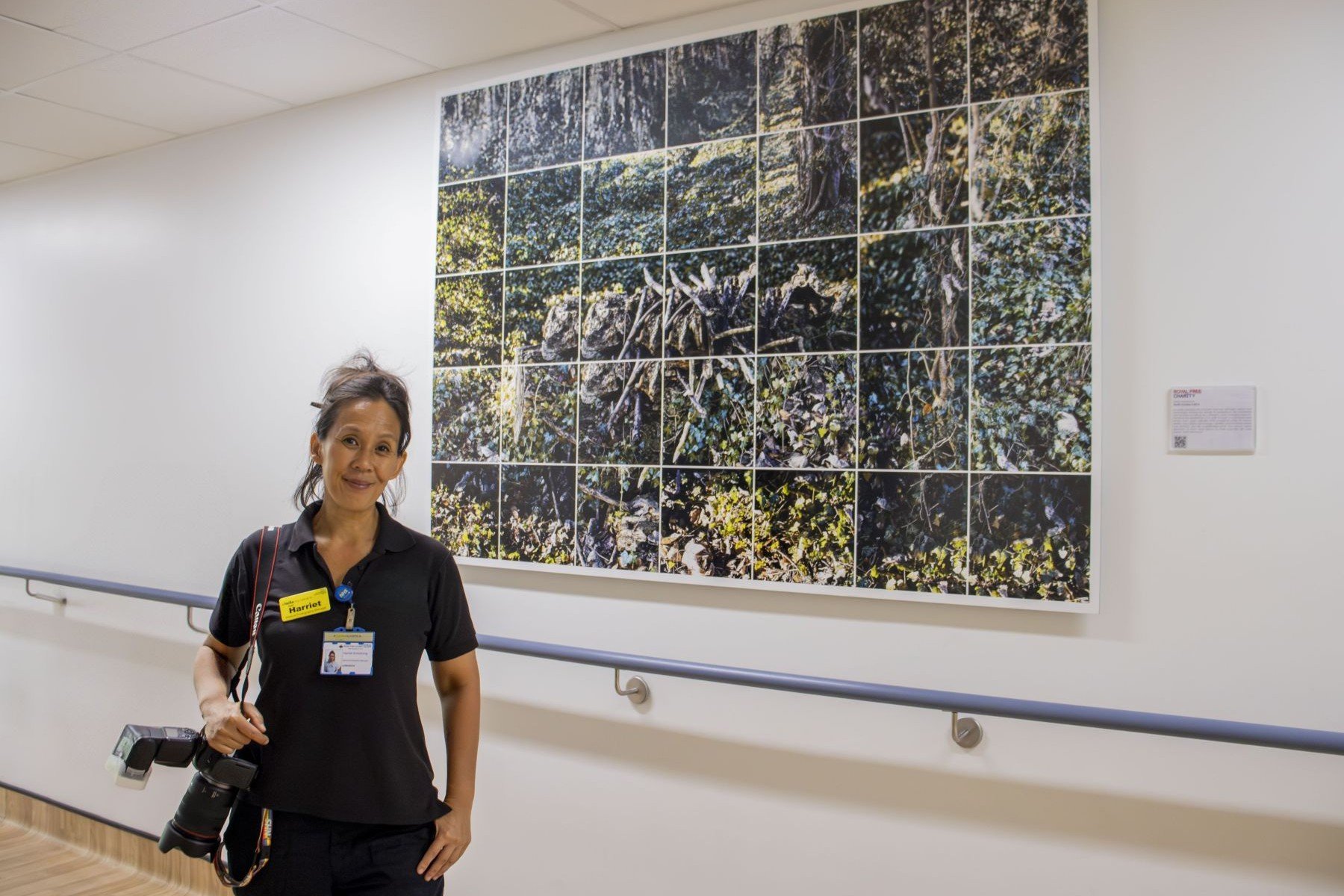
Harriet Armstrong has seen the impact of artwork at North Middlesex University Hospital first-hand. Photo: Royal Free Charity
On the acute stroke unit, participatory art takes centre stage. Weekly workshops facilitated by art tutors and medical professionals support patients to develop communication and motor skills as part of their rehabilitation. James, who took part, says: “I really look forward to the weekly art sessions; they help me feel better about my stroke recovery.”
One patient regained the use of his hand through holding a paintbrush; his paintings now hang by his bedside. Feedback suggests the sessions improve mood and encourage connection, helping patients reclaim identities beyond patienthood.
Supporting NHS staff
The NHS workforce is under unprecedented strain, with burnout widely reported. Art has a role to play here too.
A study by Queen Mary University of London and Barts Health NHS Trust found that art therapy sessions could reduce burnout risk by up to 50%. Participants reported lower emotional exhaustion, stress and anxiety, with benefits lasting at least three months.
Even brief visual encounters matter. “For staff, these visual moments can provide meaningful psychological relief during demanding shifts,” Kasia notes.
From evidence to action
Hospital arts programmes are precarious; they sit outside the NHS’s dominant logic of measurable outcomes. The visibility of healing is in tangible clinical results: disease treated, function restored, lives saved.
Art does not operate in this register. Its contribution is often intangible; experienced rather than proven. This does not mean its effects are weaker, only harder for a metrics-driven system to prioritise, making it unlikely to ever be core NHS business.
Yet everything we see at the charity shows that art makes a difference. Research helps articulate the impact, but it is charities that can act on it. We fill the space between what the NHS can fund and what people need.
Art complements clinical care. Its therapeutic power may be invisible, but woven into healing, it offers connection and relief that linger long after the corridor has been walked.